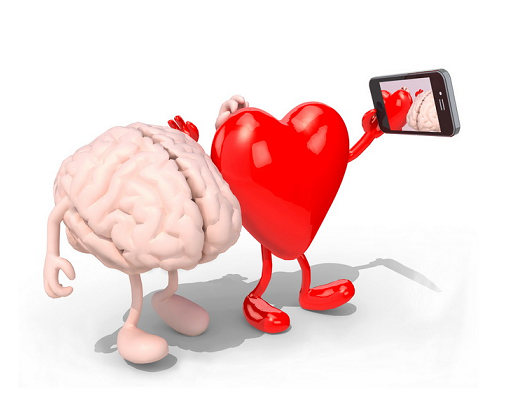
Brain and Heart: Friends or Enemies.
For many
centuries, humanity has been heatedly arguing about the eternal spiritual
battle between reason and emotions, between the brain and the heart. These two
organs symbolize two different and seemingly opposing aspects of human nature.
Brain, mind and logic represent the symbol of reason, rational thinking and
analytical ability. In turn, the heart symbolizes emotions, passions, empathy
and love. For centuries, people have debated which of these aspects plays a
major role in life and decision making. But in reality, are the brain and heart
the real enemies or perhaps they can become true friends in our quest for
harmony and happiness? In this article, we explore their interactions to
understand how the brain and heart influence each other, the strengths and
weaknesses of each, and how we can harness their synergy to achieve a more
balanced, fulfilling life and strengthen our health reserves.
When it comes to the brain and
heart, this comparison is applied in a variety of contexts. And almost every
version of such a comparison is associated with a personal view, with the angle
of consideration of this issue and with a philosophical and worldview platform
(philosophical worldview - a coherent system of
generalized ideas and views that express a person’s attitude to the world from
the position of one or another principle he has found).
In this article, the
relationship between the brain and heart will be considered in the context of
increasing health reserves and correcting unfavorable stable psychosomatic connections.
The
basis for understanding the issue.
Brain
A person needs
the brain to maintain social connections and manage himself and other people.
In addition, it is important to note that the brain produces an information
product - this is a thought.Every thought
arises and develops in inextricable connection with speech.Speech is a tool or means for social interactions with oneself and society.
In society there is a certain aggregate standard for the norm of interaction.
If a person goes beyond the standards of society, then he is perceived
differently by society. For example: there is an expression “a person is not
friendly with his head.” What does it mean?
“Be friends with
your head” -this means that a person first thinks, then does or
says, and no one Notgives in to doubts that he is adequate. In society there are limits to
assessing adequacy. A person carrying a new information product expressed in
thoughts and words can be perceived by the majority as inadequate only because
society has not developed an adequate understanding of this issue. Brilliant
people are often perceived as crazy. For example: the scientist Nikola Tesla
had a nickname - “mad scientist”, only because his discoveries were far ahead
of understanding even in the scientific community of that time.
Understanding is a universal
operation of thinking associated with the assimilation of new content, its
inclusion in the system of established ideas and concepts. When understanding
comes, the ability to assimilate new concepts appears. A concept is the ability
to penetrate into the meaning of something, to assimilate, to realize it.
Heart
The heart has
its own “brain” - the intracardiac nervous system. It is a complex network of
neurons located in the wall of the heart, mainly in the area of the
atrioventricular valves. It is responsible for the autonomous regulation of
heart rhythm and coordination of the heart as a whole. Also, the brain of the
heart has a connection with the brain, as well as with other organs and systems
of the body through the nervous, endocrine and immune systems. The brain of the
heart also produces its own information product - this is its rhythm. The
rhythm of the heart, both in the case that the information product of the
brain, producing a thought, is expressed in speech, and in the case of the
brain of the heart, it produces a rhythm, expressed in the function of targeted
blood flow. The function of targeted blood flow is the ability of the heart to
direct individual portions of blood exactly to the specified address, i.e. to
strictly defined parts of the body of the organism.
Most neural
clusters are found at the top of the heart, where blood vessels enter and exit
the heart. The neural system of the heart meets the incoming blood through the
analysis of special cells that interact with the blood. They are similar to the
smell cells in the nose and the taste cells on the tongue. Figuratively
speaking, the heart “tastes and smells” the flowing blood. Thus, the heart
receives information about the state of affairs in every part of the human
body. Some nerve clusters extend along the back of the heart and on its left
side. Perhaps all these neurons have different purposes and tasks. Nerve cells
in the heart have a say in how they communicate with the brain. Neurons in the
heart are thought to play a critical role in heart health by helping regulate
heart rhythms. The rhythm of the heart expresses its language - the “language
of the heart.” The heart ensures the life of the body through some mechanisms:
the mechanism of targeted blood flow, the mechanism of superfluidity of blood
in blood vessels and others. These mechanisms allow the heart to independently
decide how to maintain and control the functioning of the entire body. Thus,
the sources of life are located precisely in the heart. The brain of the heart,
interacting with the brain, develops its own stable idea of how to control
the body. The brain of the heart does not always “agree” to the control
commands of the brain. But the brain has mechanisms for consolidating stable
commands in the cardiac brain, which will become the basis for correlating the
health reserve of the whole organism.
It is this mechanism of
interaction between the brain and the brain of the heart that underlies all
methods and techniques of influencing the health of the body.
Let's define some of the
concepts that use the connection between the brain and the heart.
Definition of
related concepts.
To master any area of
knowledge is, first of all, to master the concepts used in it. Therefore, we
will define some basic methods and methods that in one way or another may
relate to the topic of influencing the heart through the brain.
Positive thinking - is the practice of focusing on the good in any (even unpleasant and
difficult) situation.
Visualization - Thisa method of representing something perceived in the
form of an optical image(drawings,
diagrams, graphs, block diagrams, maps, tables, etc.). In other words, it is a
visual representation of information. Visualization is creating a mental
picture of a goal. You imagine what you want to achieve and how you will do it.
Visualization stimulates the area of the brain that is responsible for
scanning the environment and searching for new opportunities.
Autogenic training - is a method of self-regulation and self-influence on one’s physical and
mental state through the conscious use of effort and concentration. It is based
on self-hypnosis of positive changes using phrases and formulas repeated
mentally or out loud. The goal of autogenic training is to achieve deep
relaxation, reduce stress, improve well-being and manage your condition. This
method is useful for improving sleep, relieving tension and anxiety, as well as
developing internal self-regulation and concentration.
Self-hypnosis - psychological action on oneself, on one’s ideas, thoughts, feelings (for
example, on the advice of a doctor in order to eliminate painful phenomena and
improve overall well-being).
Hypnosis (ancient Greek ὕπνος “sleep”) - a temporary state characterized by a sharp
focus of attention and high susceptibility to suggestion; the state of hypnosis
is caused by the action of a hypnotist or targeted self-suggestion.
But, as they say, “all that
glitters is not gold.”This means it's
far awayNot allWhat looks
valuable actually has value.Therefore, we
will pay special attention to methods related to immersion in unreality.
Immersion
in unreality: hypnosis and similar concepts.
What
is hypnosis?
The hypnotic state is an
immersion in unreality. While in a
hypnotic state, a person almost completely loses control over his body.
Hypnosis - this is a state of altered consciousness in which a
person becomes more receptive to proposals and suggestions suggested by another
person (the hypnotist). In a hypnotic state, a person may experience deep
relaxation, focus on specific thoughts or sensations, and have increased
concentration. Hypnosis is used in medicine and psychotherapy to treat various
conditions such as phobias, addictions or chronic pain.
Similar or
similar states and synonyms for the word “hypnosis” (as well as words and
expressions close in meaning): suggestion, hypnotization, hypnotization,
hypnotism, mesmerism, magnetism, trance, oblivion, agitation, motivation,
reprimand, thoughtfulness, oblivion, unconsciousness, fainting, insensibility.
Studies of the state of a person immersed in a
hypnotic trance.
Scientists have discovered
three indicators of hypnotic trance:
First- decreased activity in the anterior cingulate cortex.
Second- an increase in the intensity of communication between other parts of the
brain - the upper part of the prefrontal cortex and the insular lobe of the
telencephalon. The connection between these two areas is the connection between
the body and the brain, the way the brain perceives the position and condition
of all areas of the body.
Third- deterioration of the connection between some areas of the prefrontal
cortex and the network of the passive mode of the brain. According to
scientists, the result of this is that the hypnotized person is not aware of
his own actions.
These three indicators
indicate that hypnosis and similar states are nothing more than immersion in
unreality, loss of connection with the surrounding reality, transfer of control
of oneself to someone else. The question of whom remains outside the scope of
the discussion of this article.
The danger of practicing
hypnosis lies in the potential risks and negative consequences that may arise
when using this method. The use of hypnosis can lead to the creation of false
memories, psychological dependence, or negative effects on a person's mental
health.
Remark on the
history of hypnotism.
The Encyclopedia of Occultism
and Parapsychology says about hypnotism: “Its history is closely intertwined
with the occult.” Hypnosis and spiritualism are two different practices that
have some relationship to each other. And the same encyclopedia goes on to say:
“Even today, many hypnotic phenomena are classified as ‘spiritual’.”
The Bible is about
immersion in unreality.
This article is not a
religious article. However, it is worth paying attention to how a
world-respected source of wisdom speaks about such phenomena.
“None of you should... tell fortunes,
practice magic, believe in omens, cast spells, cast spells, consult a spirit
conjurer or a fortuneteller...” Deuteronomy 18:10,11
"...those who practice
spiritualism...will be thrown into the lake of fire" Revelation 21:8
Obviously, for a believer this
is not a debatable issue, but an unambiguously defined one. Its essence is
this: “God does not want me in any way to be associated with such people and
such practices.”
Thus, anyone who tries to
plunge a person into unreality (by influencing him or teaching him how to do it
on his own) and to perform any manipulations with him is unacceptable either as
a doctor, or as a psychologist, or as a teacher, or as a motivator, or as a
coach. -trainer, etc.
This conclusion is the basic postulate for our research in the field of the
language of the heart.
A
common physiological core for all methods based on the connection between the
brain and the heart.
Exploring various methods, techniques and spiritual practices, it becomes
clear that one way or another there are some positive effects in these
practices, no matter how different they are from each other and no matter how
any theoretical explanation of its effectiveness is added to each method.
Simply put. The positive impact is not associated with the technique itself,
but with the fact that it involves a certain natural psychophysiological
phenomenon, which is part of the “construction” of a person’s personality.
Thus, if we remove theoretical, pseudo-theoretical or philosophical
explanations, i.e. interpretation, and let us leave only the very essence of
the different methods, we will have a positive result, since it is associated
not with the philosophy of the method, but with the design of the
psychophysiological mechanisms contained in the person himself. The common
physiological core is this very connection between the brain of the head and
the brain of the heart.
Is
the brain the enemy of health?
We briefly drew
attention to how the connection between the brain and the heart is realized
when trying to achieve a positive effect on health in different ways. Well, how
do things go for the most part in ordinary everyday life? Unfortunately, for
the most part, the interaction between the mind and the heart is not always
beneficial to health. Let's look at examples.
For example -
overthinking yourself.Winding isself-programming, self-hypnosis of a negative forecast for the development
of events, situations.Beating yourself
up is a path that can lead to insomnia, problems concentrating and loss of
energy. Immersion in this state undermines health and creates a new cycle of
thinking, forming a vicious circle from which there is no escape. In
particularly serious cases, this process can result in chronic anxiety,
depression, the development of psychosomatophoric disorders and the formation
of chronic degenerative diseases.
The
self-deception specialist even has a separate name. A neurotic is a personality
composition in which a person is often emotionally involved in experiences,
easily comes to negative emotions, and constantly overwhelms himself.
All these
features can be combined into a common characteristic - high sensitivity.
Highly sensitive people have unique qualities, but they can also face certain
difficulties that are directly related to the mechanism of interaction between
the mind and heart.
Here
are a few of them:
Emotional
overload: Highly sensitive people often experience emotions more
intensely and deeply, which can lead to sensory overload. This can cause
fatigue, stress and difficulty regulating emotionally.
Susceptibility
to stress: High sensitivity makes them
more vulnerable to stress and negative environmental influences. They may
quickly become overwhelmed and have difficulty adapting to new situations.
Perfectionism: Highly sensitive people often strive for excellence and have high standards
for themselves. They may be self-critical and hard on themselves, which can
lead to feelings of dissatisfaction and anxiety.
Sensitivity to
external impressions: Excessive
sensitivity to sounds, smells, light and other stimuli can cause discomfort and
a feeling of oversaturation in the environment.
Social
Sensitivity: Highly sensitive people may be
more sensitive to other people's opinions and emotions. They may react strongly
to criticism or conflict and have difficulty setting boundaries.
Sometimes
sensitive people perceive the influence of other people, in particular medical
personnel, as significant for themselves. One type of such reaction is called
iatrogenic. Iatrogenesis - Greek. ἰατρός “doctor” + γενεά “birth”) - a deterioration in a person’s physical or
emotional condition, unintentionally provoked by a medical professional. As a
result of such exposure, real diseases can form - iatrogenic diseases.
Iatrogenic diseases are pathological processes, conditions, unusual reactions,
the occurrence of which is clearly caused by medical influence during
examination, treatment of patients, performance of diagnostic or preventive
procedures.
These are all
examples of the negative impact of the connection between the brain and the
heart. But if there is such a negative interaction, then there is also the
opposite - positive.
Cardio-mental
correlation method.
The positive interaction between the brain of the head
and the brain of the heart formed the basis of the method of cardio-mental
correlation.
Cardio-mental correlation (CMC)is a physiological system of dynamic interaction between the brain of the
head and the brain of the heart, which allows you to leave a stable dominant in
the cardiac brain in order to change and improve the functioning of the whole
body, leading to improved well-being and an increase in health reserves.
Cardio-Mental Correlationexists in each
of us, regardless of whether we understand and realize it or not. Above we
mentioned some examples of the formation of a stable negativecardio-mental correlation. But the basis of the healing effect is the
mechanism of forming a positive cardio-mental correlation.
If you practice certain actions: producing thoughts, pronouncing phrases,
turning on the imagination, turning off the will and criticism, then the brain
of the heart will begin to form a stable dominant, which it will then use to
service the body’s work.
Probably, there is no need to convince anyone that it will not be possible
to aim yourself at wealth in such a way that money “sticks or is attracted” to
you. Or sit down in the showroom of a car dealership in the latest Mercedes
brand and visualize yourself taking ownership of it. All this is a game of
imagination, craving for desires, which in no way will form a positive
cardio-mental connection for strengthening the health of the body. It's more
likely that the opposite will happen. Therefore, this mechanism has a very
specific application and should not be extended to everything.
Cardio-Mental Correlation has a wide potential for improving well-being and
health, however, it is important to understand that its effective use requires
a specific approach and practical application.
To form a positive cardio-mental correlation, it is necessary to engage in
certain actions and exercises. This may include practicing positive thoughts
and phrases, visualizing desired states and goals, and consciously turning off
critical thinking and willpower.
Cardio-Mental Correlation (CMC) plays an important role in our physical and
emotional well-being. Understanding and using this physiological system can
help us improve our health and well-being.
One of the key aspects of developing a positive cardio-mental correlation
is the practice of managing your thinking and emotions. Producing positive
thoughts, using cue phrases, visualization, and deep relaxation practices can
all contribute to the formation of a stable dominant in the heart brain.
However, it is important to understand that KMC is not a universal solution
to achieve all desired goals. It has a direct bearing on the health and
physiological functioning of the body. Therefore, it is unrealistic to count on
using KMC for material success or instant fulfillment of desires.
Developing a positive cardio-mental correlation requires constant practice
and awareness. This is a process that can be improved and developed over time.
Regular exercise and training of the brain and heart can help us achieve
harmony and balance in our lives.
Within the framework of the Language of the Heart Association, methods are
used individually adapted for each person in need and based on monitoring
indicators of the language of the heart.